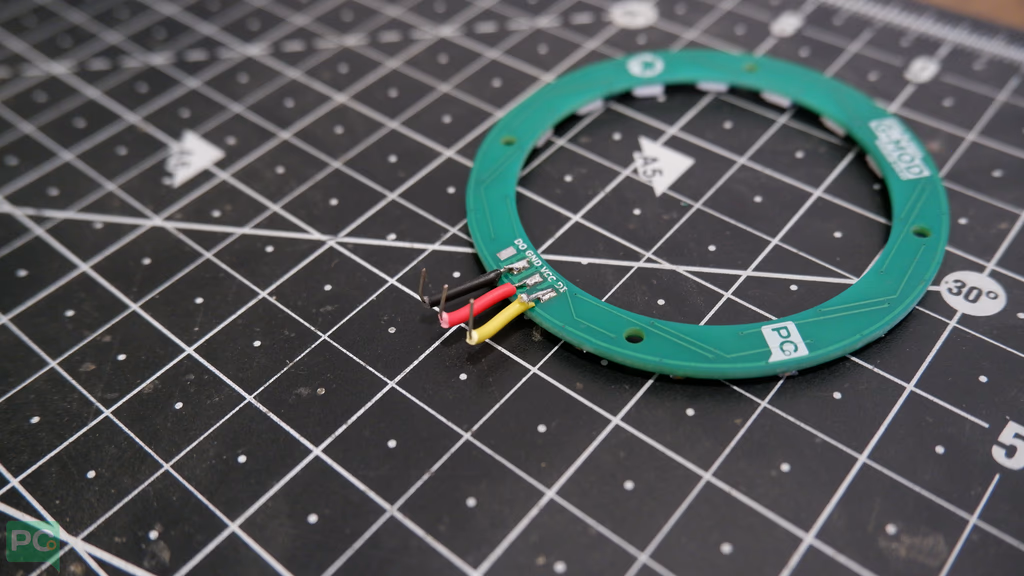
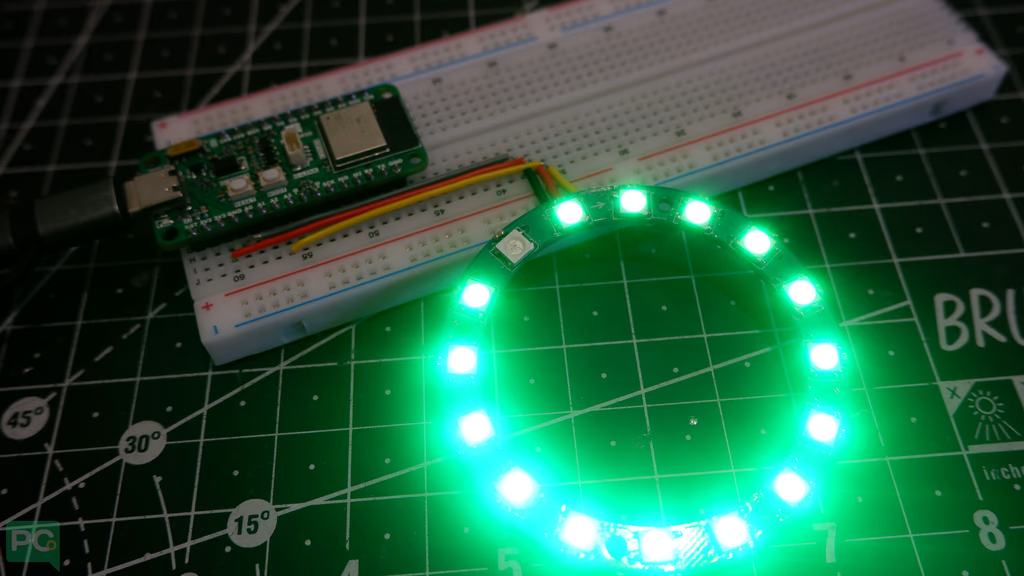
WS2812B RGB LED Ring with individually addressable LEDs, full-color effects, and easy control for Arduino, ESP32, and DIY lighting projects.
The WS2812B is a compact, addressable RGB LED module that integrates a control circuit and three discrete red, green, and blue LEDs within a single 5050 SMD package, allowing each pixel’s color and brightness to be set independently via a one-wire digital interface. Internally, it employs an integrated driver and a signal reshaping/amplification circuit, enabling daisy-chaining of virtually unlimited numbers of LEDs from a single microcontroller pin. Control is achieved by sending a 24-bit data packet (8 bits per color channel) per LED, with 256 brightness levels per channel.Integrated Design
Chip and LED in one: The WS2812B package embeds both the RGB LEDs and the control IC, simplifying circuit design by eliminating the need for separate driver components
5050 SMD footprint: Common “5050” size (5 mm × 5 mm), compatible with standard LED strip layouts and modules
Power and Data- Power: Operates typically at 5 V DC, with a maximum recommended current draw of ~60 mA per LED at full white (all colors at maximum brightness)
Data line: A single input (DIN) and output (DOUT) pin carry the high-speed data stream; the protocol embeds timing for “0” and “1” bits directly in signal pulse widths
Individually addressable: Each LED module responds only to its specific 24-bit data, so you can set unique colors for each pixel in a chain
High color resolution: 8 bits per channel → 16.7 million possible colors per LED
Cascading capability: The DOUT of one LED links to the DIN of the next, allowing long chains (hundreds or thousands of LEDs) from a single microcontroller pin
Built-in signal reshaping: Ensures clean, consistent data transmission through long strips without external repeaters
Data is sent as a continuous stream of 24 bits per LED (G7…G0, R7…R0, B7…B0). Timing-sensitive pulses distinguish “0” and “1” bits, typically requiring precise.
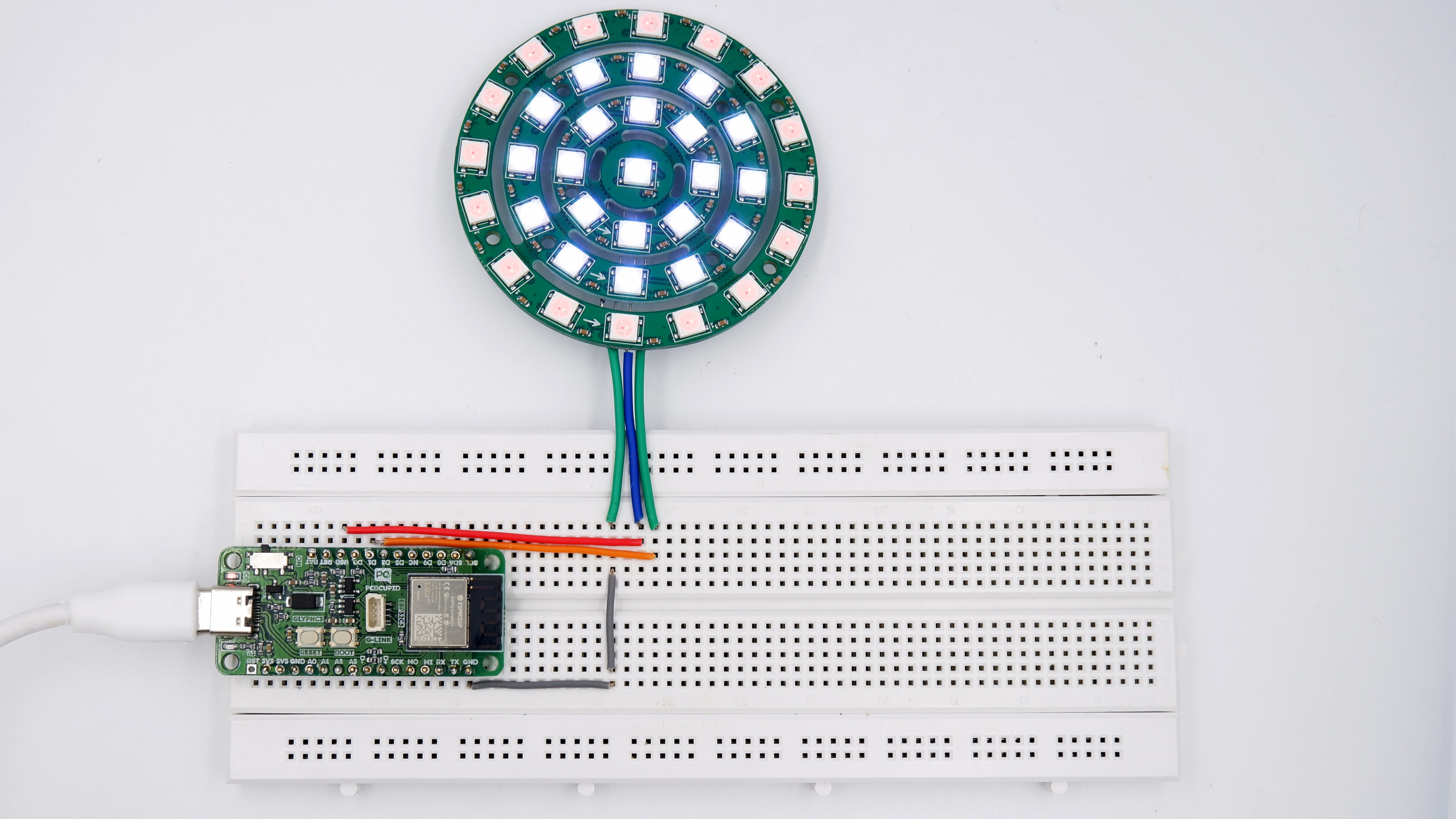
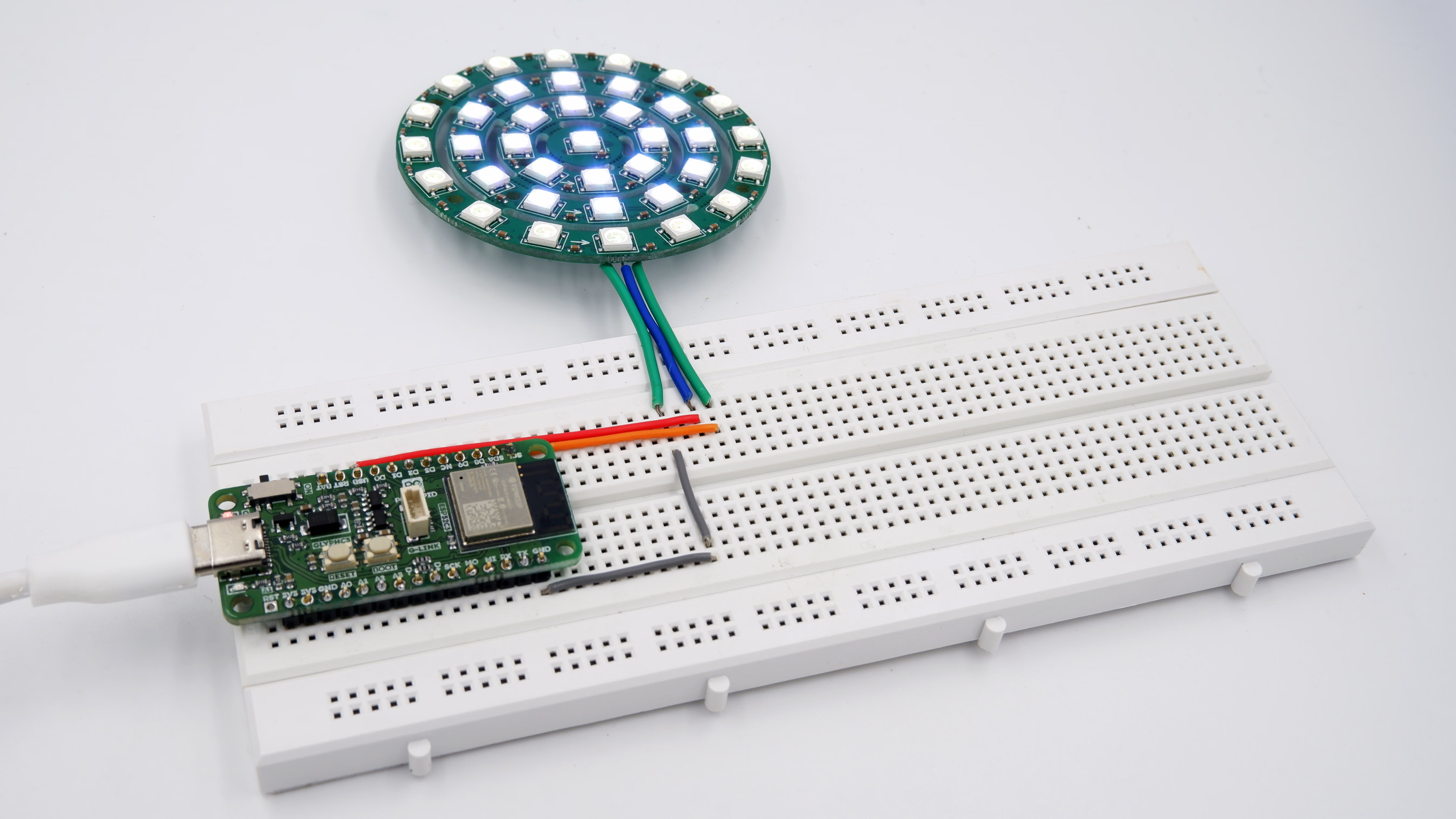
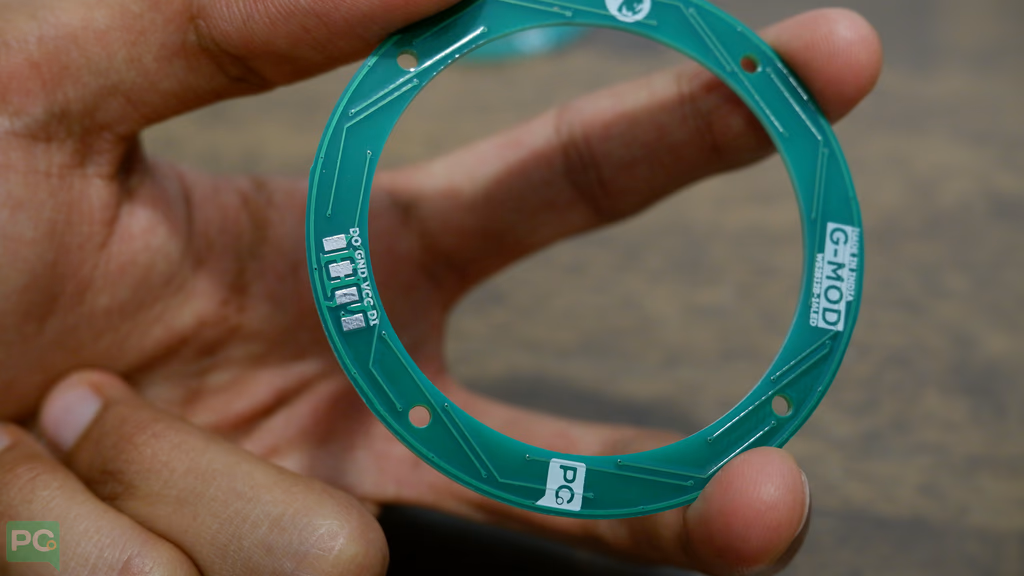
The G-MOD WS2812B circular LED module is designed with three concentric rings of addressable RGB LEDs. Power (VCC, GND) is distributed across all LEDs in parallel. The data signal (DIN) enters from the solder pads at the bottom, drives the innermost ring first, and then cascades outward ring by ring. The final LED in the outer ring routes its data out to the DO pad, allowing multiple modules to be chained together.
Inside the PCB, three solder jumpers connect the concentric LED rings. These bridges carry power (VCC), ground (GND), and the serial data signal outward from the inner ring to the outer rings. This ensures all LEDs are powered in parallel, while the WS2812B data chain cascades ring-by-ring.
#include <Adafruit_NeoPixel.h>#define LED_PIN 1 // Pin where NeoPixel strip is connected#define LED_COUNT 37 // Number of LEDs in stripAdafruit_NeoPixel strip(LED_COUNT, LED_PIN, NEO_GRB + NEO_KHZ800);// Define 5 colors (R, G, B)uint32_t colors[5];void setup() { strip.begin(); strip.setBrightness(50); // Brightness (0-255) // Prepare the colors colors[0] = strip.Color(255, 0, 0); // Red colors[1] = strip.Color(0, 255, 0); // Green colors[2] = strip.Color(0, 0, 255); // Blue colors[3] = strip.Color(255, 255, 0); // Yellow colors[4] = strip.Color(255, 0, 255); // Magenta strip.show(); // Initialize all pixels to off}void loop() { for (int i = 0; i < 5; i++) { // Loop through all 5 colors setAllColor(colors[i]); // Set all LEDs to the current color delay(1000); // Keep it for 1 second }}// Function to set all LEDs to one colorvoid setAllColor(uint32_t color) { for (int j = 0; j < LED_COUNT; j++) { strip.setPixelColor(j, color); } strip.show();}
For the Pcbcupid Glyph S3 to appear under Tools > Board > esp32, the esp32 board version installed in the Arduino IDE should be greater or equal to 3.1.0.
Tools > Port and select the port connected to your GLYPH.
Tools > USB CDC on Boot >Enabled
If USB CDC on BOOT not enabled, you won’t be seeing any serial data on Arduino IDE.
Upload the Code
Click the upload button (➡️ icon) or use the shortcut CRTL + U in Arduino IDE to upload the code to the board.
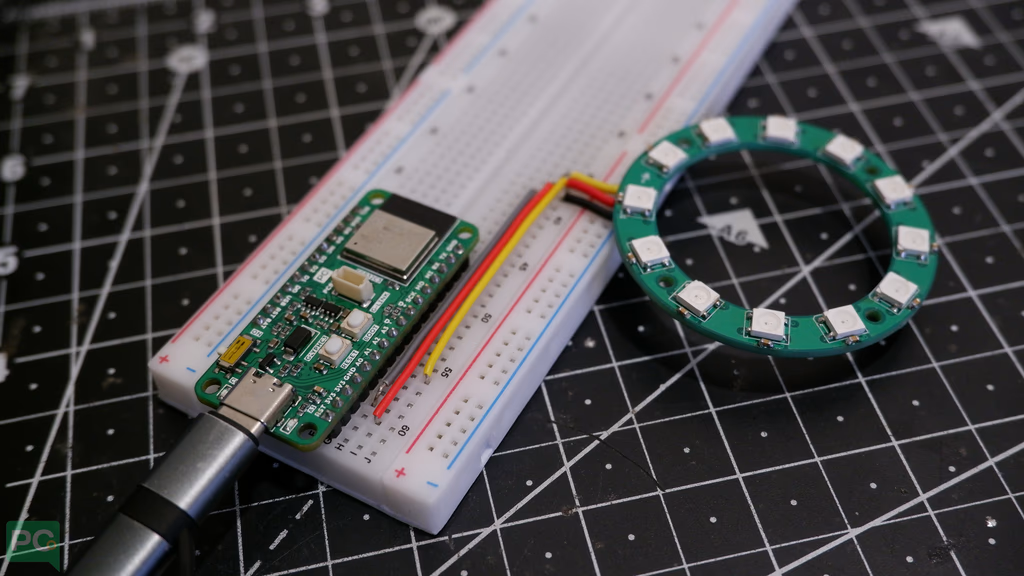
The ring can be broken on and used as a individual ring setup and have the same circuit. Just change the number of led on
the code from 37 to the desired number.
#include <Adafruit_NeoPixel.h>#define PIN_WS2812B 7 // The ESP32 pin GPIO16 connected to WS2812B#define NUM_PIXELS 16 // The number of LEDs (pixels) on WS2812B LED stripAdafruit_NeoPixel ws2812b(NUM_PIXELS, PIN_WS2812B, NEO_GRB + NEO_KHZ800);void setup() { ws2812b.begin(); // initialize WS2812B strip object (REQUIRED)}void loop() { ws2812b.clear(); // set all pixel colors to 'off'. It only takes effect if pixels.show() is called // turn pixels to green one-by-one with delay between each pixel for (int pixel = 0; pixel < NUM_PIXELS; pixel++) { // for each pixel ws2812b.setPixelColor(pixel, ws2812b.Color(0, 255, 0)); // it only takes effect if pixels.show() is called ws2812b.show(); // update to the WS2812B Led Strip delay(500); // 500ms pause between each pixel } // turn off all pixels for two seconds ws2812b.clear(); ws2812b.show(); // update to the WS2812B Led Strip delay(2000); // 2 seconds off time // turn on all pixels to red at the same time for two seconds for (int pixel = 0; pixel < NUM_PIXELS; pixel++) { // for each pixel ws2812b.setPixelColor(pixel, ws2812b.Color(255, 0, 0)); // it only takes effect if pixels.show() is called } ws2812b.show(); // update to the WS2812B Led Strip delay(1000); // 1 second on time // turn off all pixels for one seconds ws2812b.clear(); ws2812b.show(); // update to the WS2812B Led Strip delay(1000); // 1 second off time}
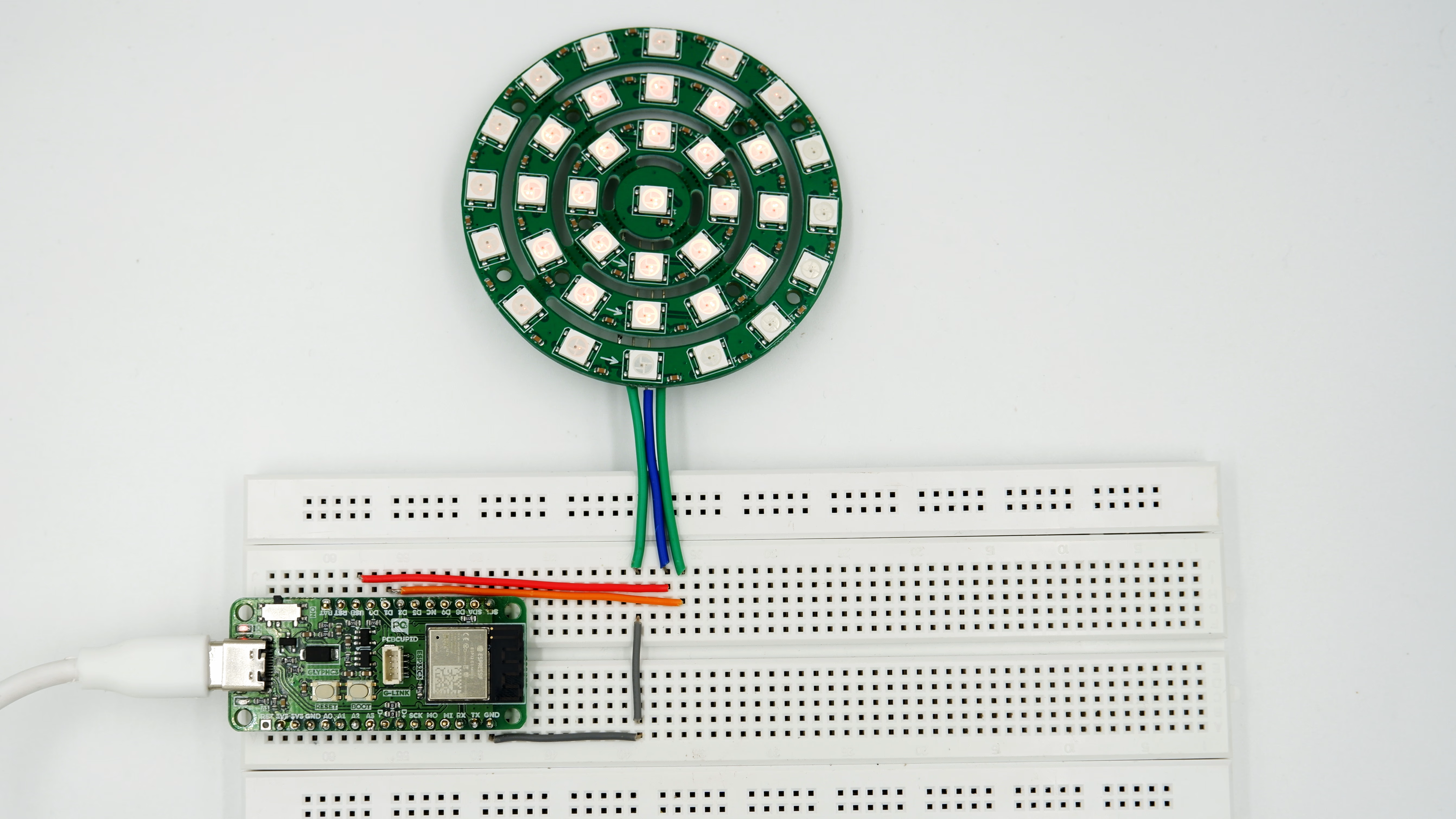 The G-MOD WS2812B circular LED module is designed with three concentric rings of addressable RGB LEDs. Power (VCC, GND) is distributed across all LEDs in parallel. The data signal (DIN) enters from the solder pads at the bottom, drives the innermost ring first, and then cascades outward ring by ring. The final LED in the outer ring routes its data out to the DO pad, allowing multiple modules to be chained together.
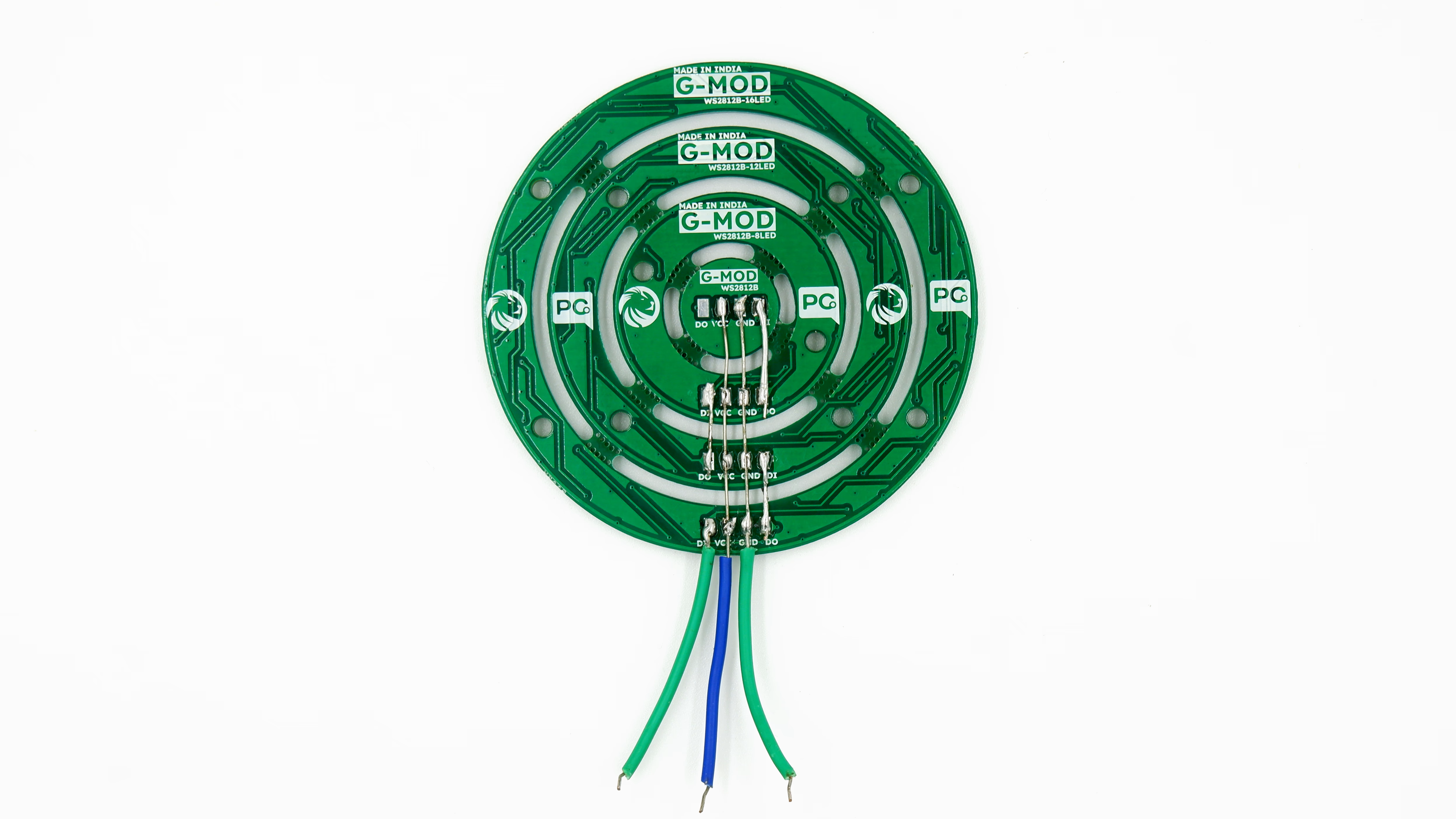 Inside the PCB, three solder jumpers connect the concentric LED rings. These bridges carry power (VCC), ground (GND), and the serial data signal outward from the inner ring to the outer rings. This ensures all LEDs are powered in parallel, while the WS2812B data chain cascades ring-by-ring.